
Douglas Messerli: California Poets Part 10, Five Poems
Updated: May 12
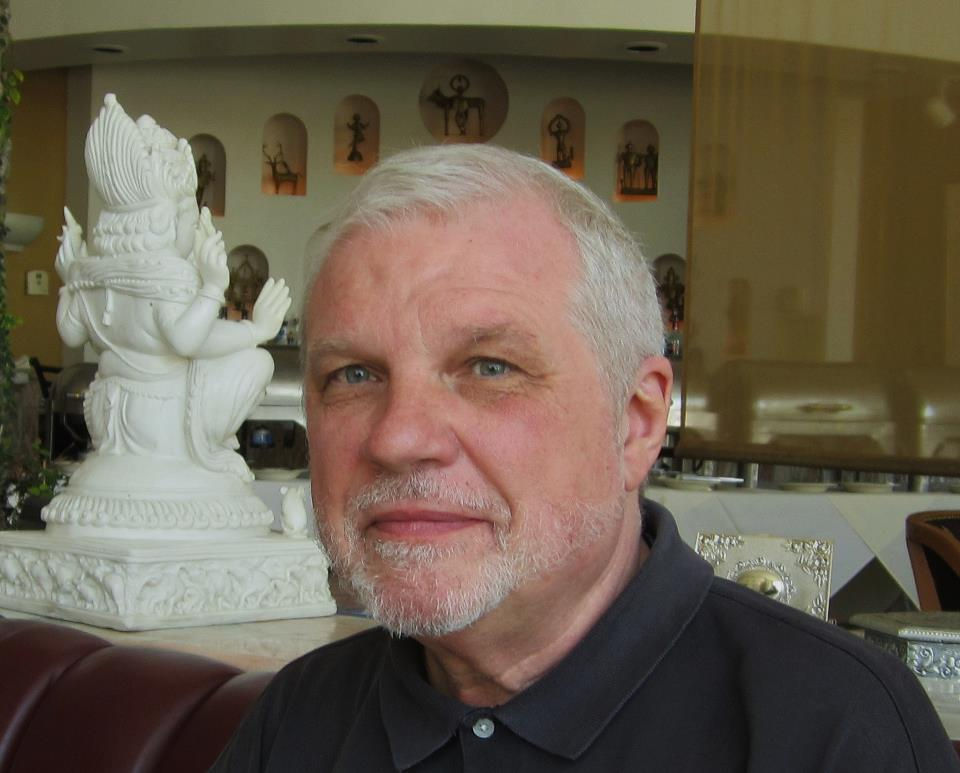
Douglas Messerli
April 2nd, 2026
California Poets: Part X
Douglas Messerli
Five Poems
How Can I Resist Returning?
in memoriam Neeli Cherkovski
What does the rattle of bones
do to linger? Love in grand gestures
sweeps through the dangerous curves
of the byways they call the forest.
Terror has rusted the poor Pan,
empty now with snarling dogs
to protect his interests, which happens
to be a black tower of pure porn.
If you stand there long enough
between the white mosquito and
the dwarf of indignation, you will
certainly discover the narrow path
to take you away from the snake.
But then, where does that get you?
The shoulder still aches, the candle
has gone out and the harsh men plod
north, naturally, since that’s where progress
always points. The cling toward what we
felt always pulls back into the diminished
landscape, the low-lying clover and the weed
we call dandy perhaps because it is just enough
to stand out in a sea of endless grass. I’ll
climb the mountain and drop down into
the orgy where the nymphs are born.
Don’t worry, I can take perhaps another
hot heat-up of the racing heart and a pant
or two of recollection. The father always probes
into the meaning of his loss, it’s inevitable
that he can’t see his way into the woods of desertion.
Meadow grass withers, and turns yellow
in the dead creek. But a lovely young boy
stands in the now empty pond to lull in the red sun.
Los Angeles, December 27, 2024
Awake Asleep
after Robert Duncan
Did I really want to come into the question
of the abyss? You said it was
the moon, but I didn’t believe you,
letting the eagle go as if it was a falcon.
I know a little language, but these days I forget
that speech is surrounding us in every sense.
Old themes keep insisting on their memories. My mouth
is wounded from winding around too many lips.
Ghosts and lovers who won’t give up their howls of what
I guess I couldn’t truly provide: the bliss
of just another moment, the unspoken tongue
which was tied to my gums, the teeth.
Today they are rotten, stars surround
every house, and the angels have shat
on every one they visited. The poem from the heart
is a labor to be forgiven. The solo soul wasn’t
really happy, not because the world wasn’t on his lips.
It was that damn window, that was the sin
for showing us the constellation in which we could not
exist—or was it the lightning of a stormy night lifting
up the rut of those potatoes we left in the corner beside the bed?
I bled red-eyed and simply watched what I should have licked.
But then it opened up, a little frame of vision
and spoke in conversation with light that dark night.
Los Angeles, July 23, 2024
Roots
after George Oppen
Roots which are themselves simply hopes, hoops
of small self-interest we describe as “leaking
the ancient air in,” which I suppose we didn’t really
even want given the contagion of those crowded dirty
streets. Now we can do only the most horrific of killings
in order to control the black winds, the squalls, and rags
of the forces that disregarded us: and the world changed.
Once upon a time there were fish in the sea. Iron standing
in the midst of the mud, nothing however to hold onto
since the mud and the iron were filled with fire and earth.
We who did the killing claimed no responsibility. The roots
had yet not grown into our bellies, the winds of March, the ides
of iodine upon which we had pasted the pustule of our past.
Therefore young men determined to be young men, a beer bottle
closing the door of continuance. The town was to be negotiated.
The arms I thought to have embraced me were only cannons.
I remember the collar of the winter coat, the tree to where it took
me, and the toss, the roots and the end of my entrance into where
they lay me down to sleep. All the boys accepted them as currency,
the boy who was destined to be lost. There is now a snow-capped
volcano a few miles from here that spit up his name, the familiar
flesh of his familiar disk. He was my brother, my mother, my smother
of so much possibility. I called out to him and called out again.
I called out to him, to his neck, his cheek, even the lips with which
for a few moments only turned me into an adult. All the young men
became fodder, dust for the cannon fire. Earth and iron grown into
the mortar of what we as a generation built upon that muddy plot.
We were not rooted, they reported, in the activity for which they had
put us on the planet. We were not even at the roots of our own desire.
We were not responsible for the winds, the rags, the black plague
which scratched at our throats. The bellies were empty. We were not.
Los Angeles, June 22, 2024
Sound Advice
for Michael Davidson
The animal who always appears in such fables
rhymes with blood, becoming someone who naturally
looks like me. I had this feeling preceded by flesh
pounding on the temples of my injustice, the wolf
waiting just outside the city, spilling as all bullies do
the water out of the gene pool.
Can I still wear denim
to your wedding? It’s a good thing dreams are still
separated into drawers, shuffled around like the
chifforobe of the unintended rape of your good
intentions. I must have donated my genitals
to a worthy cause for the fog to have come over
me so close, the deer gazing through the window
like does always makes a to do for the excuse.
I’ve stopped
answering the phone since no one any longer has one.
Except me, the “palabra of the optimal boorish.” I’m here
to hear you if you want, roaring forks and glasses falling
into the clinks of beer that bear the little bare boy to his
bad tidings. Stroke upon stroke I recall the tympanum
of pitch, the puree of the flower and white milky light
they’re poured into it. I summoned the butterfly to explain
why.
Los Angeles, May 29, 2024
Motive and Opportunity
for Paul Vangelisti
Stone is moral, the peanuts on the railing, the lusty
shriek of the man waiting in the garden for just your
shadow. Here, no hear, is an old melody, a very sad
lingering of the silly sex song, like a deep assassin,
singing about its conviction for the straggly palm.
South of parody is the night with a quick switch of the light
of the drunken paradise you have created for yourself,
God forbid. That summer when you were a drunken skull
who kept calling me the names of the missing boy who
having fallen off the mountain described the arroyo
in which your tongue had been entrapped, the unending summer’s
idyll of the avenues you had denied me. It happened a century
ago, one step away from yesterday when you simply stomped
into the wide kitchen to open the refrigerator that froze us
to death, just after nudging it open with your elbow pushing
into the well-kept yard of roses, avocado, and lemon trees.
Step round the rickety gate and you’ll see the point of dereliction,
the evil of the commonplace images which we once imagined.
Stone is the moral, that lusty shriek, the peanuts now eaten up.
Alone in the bed, they circle you, those fingers, knuckles, fists.
Los Angeles, January 27, 2024
Interview
May 11th, 2026
California Poets Interview Series:
Douglas Messerli, Poet, Novelist, Editor, Publisher
interviewed by David Garyan
DG: Let’s begin with your activities as editor and publisher, both of which go back to the mid-seventies when you founded Sun & Moon, a literary journal that later printed books under the same name and is now called Green Integer. Over the past fifty years, your catalog has grown to include some of the most recognizable names in literature. What challenges have you had to face up to this point and was there ever a time when the entire endeavor was seriously in jeopardy?
DM: I love your question, in part because there was never a time when everything I did was not under jeopardy. In those days I must have lived in a dream in which the fantastical world that I had quite accidently created became something with which I couldn’t stop engaging—particularly frightening given that Howard and I had hardly any money and the future failure of such an endeavor pointed to disaster at every step along the way. I walked a high wire through most of my life, a half blind dreamer who somehow was dogged enough to not know when to get down from the trapeze line and dredge back into “real” life. How strangely that a man with absolutely no balance could pretend for so long to be walking along that wire.
Howard and I had long talked throughout our graduate school days in the early 1970s about bringing out a magazine, somewhat like John Ashbery’s Art and Literature (1964–67). But many people talk about doing such things, and I knew if we kept talking long enough it would never come into reality. I think it was in 1975 on my birthday that I announced I was going to do the magazine, what I imagined would be a mimeograph mag, still a popular format in those cash-poor days.
I named it Sun & Moon after the major Austrian novel Sonne und Mond by Albert-Paris Gütersloh. Marjorie Perloff suggested the ampersand. I wrote several people, without having any concept of editorial viewpoint or even a notion of what kind of literature I was seeking. But by that next year I had been utterly transformed by Perloff’s class in which she was basically teaching the works of her book The Dance of the Intellect: Studies in the Poetry of the Pound Tradition, and I read almost everything Pound had written. And accordingly, I was beginning to wake up to the late modernist and even the post-modernist traditions. I think it was when Gilbert Sorrentino sent me some poems that I suddenly realized that, no, I couldn’t just do a mimeograph publication anymore. I think Howard’s father offered to pay for the first issue, and I suddenly discovered the world of hot and cold type (a big issue in those days), the various stocks of papers, and how to lay out pages, four at a time, turning the huge lay-out boards upside down and alternating sequences. The computer type was not very reliable in those days and might actually fade out even before you got it home. I even learned how to type on a huge typesetting Compugraphic machine.
Besides Sorrentino, in that first issue I published an essay by Charles Alteri, and we had essays on art by Washington, D.C. sculptor Ann Truitt and Agnes Denes. Other than that, I’m embarrassed for my choices. But I was learning, and catching on quickly. By the second issue in Spring 1976 we had a story by Los Angeles eccentric fiction writer Sam Eisenstein (I later published several of his books), a piece on Mina Loy, and work by artists Adrian Piper and a look back at Louis M. Eilshemius. I included my essay, written in Perloff’s course, on John Wieners. So I was beginning to find a poetics to follow. By issue no. 4 we were publishing works by Barbara Guest, Charles Henri Ford, Tom Ahern, Charles North, Gerard Malanga, Douglas Woolf, Michael Lally, Lucy Lippard and California artists Angelo Iippolito and Joyce Shaw, as well as translations by Rainer Maria Rilke. And, most importantly, support began coming from both the Coordinating Council of Literary Magazines and the National Endowment for Arts which permitted me to publish two issues a year.
But, at that point, I was already so impatient to publish other writers that I knew what I was seeking in poetry and fiction. In the midst of this activity, quite illogically, I began a mimeograph magazine Là-bas which through stealth I printed on paper and ink from the University of Maryland and mailed out free to major poets and other writers bi-monthly.
Both presses came to their end at about 10-11 volumes, about the constant for significant presses (although there are important exceptions). There I published figures such as Bill Berkson, Larry Eigner, and others who never appeared in the pages of Sun & Moon.
Clearly by this time, I had become addicted to publishing, although I was also writing poetry and fiction myself, and soon realized that, perhaps, if I started actually publishing books, I might be able to sell enough copies to help support both ventures. I was a fool, thank heaven. So I began with a mimeograph book by Charles Bernstein, and quickly moved on to a typeset book by David Antin, another by Tina Darragh, and from there endlessly moving outward to include major fiction writers who I felt weren’t being represented by major American publishers the way they ought to be, perceiving that without their works we would lose an entire generation of major fiction writers. Having read only a few selections of a truly wonderful fiction by Johnny Stanton, I opened up the New York City phone book to find the telephone number of Johnny Stanton and called him up one night from Philadelphia, where I was then teaching at Temple University, and asked him if he had ever finished his work Mangled Hands. He told me the manuscript lay in a box under his bed, and I begged him to send it to me. He did. Paul Auster and Russell Banks (both of who went on immediately to commercial presses and success) sent me their fictions. Steve Katz, Fanny Howe, Marianne Hauser, Richard Elmann, Wendy Walker, Jaimy Gordon to name a few sent me truly glorious works of fiction; and then the poets I’d grown to love, Bernstein, Bruce Andrews, Susan Howe, Hannah Wiener, Lyn Hejinian, John Weiners, Clarence Major, Guest, so many others joined the press, as well as the dramatists Mac Wellman, Len Jenkin, Maria Irene Fornes. Simultaneously, I sought up the work of older figures who had not received their full due, such as Djuna Barnes, Gertrude Stein, Carl Van Vechten, Andre Breton. And suddenly I realized that there were all those wonderful major world writers who still had to be introduced to USA audiences. There was no end. The world of great writing came to me just as I sought it out. It was a mutual project of the love of literature.
Still, I had no money, and even NEA grants (later some money from the Andrew W. Mellon Foundation and other support) didn’t begin to answer for my literary lust. I never once took a salary. And I borrowed endlessly from our personal savings to move ahead. I had grown so madly in love with my growing list of literary geniuses that I, quite fortunately, did not behave sanely.
Even a new series, Green Integer, smaller in size and presumably cost (but daily growing larger in reality), began to take up my whirl of energy, as I moved from book to book. I was always in jeopardy, always terrified of royalty time, of paying out huge printing bills in the day before on-demand printing. What slowed me down eventually was the cost of distribution, the immense charges of the unsold stock they held, and the growing disinterest, finally, which our distributor— now one of the major distributors in the world, Ingram—showed for experimental and international writing.
When Sondheim’s “I’m Still Here” from Follies is performed, I hear those lyrics as being sung for me and many another independent press as well. I have published approximately 600 titles between Sun & Moon Press and Green Integer. I cannot even imagine how that happened, particularly without any real financial support. Jeopardy? All of this should never have existed, but did nonetheless.
DG: In addition to Douglas Messerli the poet, there’s the dramatist Kier Peters, the editor Per Bregne, the book designer Katie Messborn, the theorist Claude Ricochet, and the novelist Joshua Haigh. To the untrained eye, they’re all different people—to those who know your work, each one is Douglas Messerli, at least in some shape or form. Their stories of origin are pretty well documented in a 2004 interview with Charles Bernstein. Instead, I think it would be interesting to know how these “personalities” have changed over the years, who is more active these days and who less, and to what extent you find it difficult to keep each of their histories straight with the passage of time?
DM: Well, I have always felt that most human beings have many selves within them. Just as we have learned about sexuality, we are not frozen, or at least need not be, with one identifying being, which has long been the belief of the masses. Some writers are absolutely wonderful, but refuse to speak in anything but one voice, repeating themselves over and over again until their work loses its urgency. I always felt why not let my selves free. Some personas, such as the book designer Katie Messborn, grew out of the simple need to not let people know just how much my publishing was the activity of just one individual. I wanted people to sense that I was a “we,” a commercial entity. Later with wonder editors such as Perla Karney, Ann Klefstad, Diana Daves McLaughlin, Pablo Capra and others, and some remarkable interns, it was a communal effort, but in the beginning it was just me, hence the creation of figures like Katie Messborn, an amalgam of a designer friend, Kevin Osborn and Douglas Messerli: K. D. Messborn. He helped with one design, my early contemporary anthology of fiction as Katie went on to design all of the Sun & Moon titles alone. She no longer exists. I imagine her having died of exhaustion, although given that I am now reviving the Sun & Moon label, perhaps she might again spring to life.
Claude Richochet was a kind of joke. While walking the streets of Philadelphia with a student and future poet, Joe Ross, we were looking for Italian restaurants in a city filled with homes of great Italian cooking, and that’s when I created a new French theorist, crazily imagining his oeuvre, and finally beginning to recreate it. Claude is dormant but still in my mind. I would love to reproduce others of his collected works. But then I am now so old and tired that reimagining him is probably just a pipe-dream. But you never know.
Joshua Haigh, a combination of the first name of a bartender at The Cedar Tavern in NYC and my grandmother’s maiden name, was borne of a kind of necessity. Writing a fiction in which the central figure was a pedophile, in a work exploring a dystopian world still invested with moral values, I suddenly grew frightened of using my real name and created a one-time persona to help me out. He will surely never come back to life.
Now Kier Peters is a dear friend, an open persona to allow me to explore and publish drama, my first love, without carrying along all the baggage of being me. He still exists, and will surely write another play or two before I die. Kier is a dear friend I hold close to me always.
So too is Per Bregne, a Danish boy I created when in Copenhagen I saw a few books in the Green Integer format and decided against all logic to begin yet a new label within my Sun & Moon world. Afraid that my writers and the general public might think I had now grown truly mad in beginning some new, I felt it might be safer to create a new publisher. I have always loved the name Peter, and wished I might have been named after my great grandfather, hence Per, the Danish equivalent. In Danish “bregne” means “fern.” My grandmother’s maiden name “Fahrni,” which is Swisse Deutsch, suggests someone who lives near ferns in Thun region of Switzerland—the native home of my great-grandfather. So how can Peter Fern ever die, living in my blood? He continues to publish every Green Integer title and probably will remain at his job until I drop dead.
And there are others, for example, Gottlieb Casper (Casper was my mother’s maiden name, Gottlieb one of my great-uncles), a young German-born poet attempting to come to terms with US poetry. This figure created just two essays, one a satire of Louise Glück, a poet I utterly despise—who might have imagined that she would go on to win the Nobel Prize for Literature—and who, with poet Martha Ronk, attended a very strange event wherein noted ageing and youthful actors who weren’t invited to the Academy Awards were brought together in a lavish Los Angeles restaurant to watch the awards, in which during the commercials mediocre LA poets were invited to read their poems. Paul Vangelisti offered me his invitation if I would cover the event as Gottlieb, which I gladly accepted and wrote an essay satirizing the event and the poets.
There may have been even other pseudonyms I’ve forgotten. I know it sounds as if I have a multiple personality disorder or what is now described as a dissociative identity disorder, but really don’t we all imagine other visions of ourselves? And I know full well that these are me performing in this world as Douglas Messerli. But I love the confusion, the multiplicity. One of the most joyous moments of my life was when I was met at the Boston Airport by poet Forrest Gander holding up a large sign of identification reading Claude Richochet. I felt immediately at home.
DG: How seriously have you considered the creation of another persona in recent years?
DM: Anyone creating so many versions of the self, of course, confuses the more mundane world of solid beings. In some ways I wish Kier Peters and Joshua Haigh, perhaps even Claude could have come home to me as Douglas Messerli. But then, they wouldn’t have been free to be themselves would they? I will argue, perhaps until the day I die, that we should encourage our various dreams of ourselves to thrive. Don’t worry about finding “your voice” and holding on to it for dear life as if you are afraid of being the multiple possibilities that exist within. But at my age, I cannot possible entangle myself with yet a new persona. I am the name I was given, happy with my sexual identity, and joyful for having been able to participate in life with so very many aspects of myself. As someone who has loved and written about drama, poetry, fiction, dance, art, performance, food, along with various other experiences—and now writing a multi-volume study of gay film—I am still various. It represents a loud and joyous clanging that probably sounds far too dissonant, like several orchestras of Charles Ives playing different compositions at the very same moment, for most people. But I, Douglas Messerli, have been lucky to play all those tunes simultaneously. No new beings for me on the horizon.
DG: It’s always fascinating when visual art and poetry come together. In this respect I want to talk about Bow Down. The focal point is in fact two points, the first John Baldessari’s art and the second Italian poetry, which is “translated ‘back’ into Italian,” as you’ve stated in an interview with Charles Bernstein. In addition to the collaborative process, could you say a bit more about how the act of translation influenced the poems themselves? How much dialogue was there between you and John when it came time to choose the paintings, what were you reading, and did you know from the beginning that the collection would be dedicated to Amelia Rosselli?
DM: The project, if I remember correctly began with Paul Vangelisti who had lined up a number of poets with artists to write a collaborative work. We first assigned me to Pamela Goldblum, Jeff Goldblum’s sister. We met and didn’t quite hit if off. Her work didn’t particularly appeal to me, and she didn’t seem that much interested in working with me either. So I suggested either Baldessari, who I had met once or twice, or Ed Rusha, who I knew slightly better. Finally, I just realized that Baldessari would be a better choice because both of us worked in a kind of collage method.
Baldessari invited me to his studio, but I was met only by an assistant, who explained that basically, John gave me free choice of images for the book, hinting, however, that I might like to work with some of his earlier photographic pieces. I chose a selection and then commenced.
Given the Italian background of his father, it seemed almost natural to ground my work in the Italian world. Just as John often stole bits and pieces of images from other sources, one of my major methods of writing has been to dip into the work of poet friends, snatching small phrases, words, or just participating in an emotional response which I then free associate with my own narrative impulses, while breaking them out of their narrative field. In this case, since I had been working closely with Italian poetry in translation with Paul and Luigi Ballerini, and had attended a huge conference in Italo-American conflux of poets at New York University and later co-sponsored through Sun & Moon with UCLA in a Los Angeles-based conference of Italian and US poets, I had become quite immersed in Italian poetry through the translations, and had formed a nice relationship with Amelia Rosselli, whose early collection I published. I also felt a strong kinship with the I Novissimi whose collection I published in English on Sun & Moon press. Accordingly, I dipped into their poetry, writing through their works while at the same time taking cues from the visual works I’d chosen to include in the book.
When Paul and Luigi ultimately decided to publish it in Italy, the works were translated back into Italian, which always intrigued me. Did any of the original Italian return to the poems or had it, a bit like the old game of telephone, become so separated from any remnants of the original writing that is seemed utterly uninflected from the original language?
Since I had titled the work, Bow Down—words stolen from Rosselli—and she had tragically committed suicide in 1996, the dedication to her seemed almost inevitable.
DG: In 1987 you published Language Poetries, an anthology dedicated to poets working within that movement. It wasn’t the most pleasant experience, to say the least, as petty rivalries tried to stifle your vision. In 2003, you reissued the anthology with an afterword that set the record straight, and following that, in a 2022 interview with Martin Nakell, you had this additional thing to say about the matter: “I don’t think that today I would feel comfortable belonging to any ‘group.’ And gathering into groups has always been an activity of the young who band with others often simply out of kinship, an attempt to find poetic identification, and to get some needed attention.” Apart from writing cliques, if you will, is there still the chance to build authentic writing communities these days, or has technology—and more specifically social media—put the final nail in that coffin?
DM: That’s a truly interesting question that I’m not sure I am able to answer, simply due to not being able to speak for a generation more affected by the technology than mine was—although of course, the internet did come of age during the “Language” movement and we took advantage of it; but social media was not yet fully developed quite the way it is today. I think the issue, however, is not technology as much as it is the feeling that younger poets might see the need for a radical shift in poetics.
How much does poetry matter—as it most certainly did for those of us associated with the “Language” group? And do younger poets need and want to link up to identify themselves with a certain set of issues regarding poetry? Sometimes this can happen in the most casual ways as it did for the so-called New York School, or it can emanate through the force of a couple of powerful writers and thinkers. Perhaps it can only happen when people feel the will and the need to accomplish such an act, and, most importantly, be willing to take abuse of those not included in their “group.” Most of the “Language” poets grew up in a milieu of protest and the belief that language could actually change things. If language becomes something dangerous again—if it were to go from a tool of mendacity to an instrument of truth-telling—then perhaps a group that speaks to those issues and shares a vocabulary may rise again, perhaps even on the internet!
Incidentally, just to keep the record straight, I was never able to reprint “Language Poetries,” but I did write a long essay attempting to explain what happened precisely in the gathering of that anthology. For the most part it was a pleasant task, and taught me a great deal about how to create an anthology, after which I created several, including my important From the Other Side of the Century: A New American Poetry 1960-1990.
Language Poetries just came at a very unfortunate moment when a few members of the San Francisco grouping felt under attack at home and sought out a sort of proprietary notion about a grouping that was always very loosely put together. In fact, no one has ever been able to fully explain just what “Language” poetry was and who was doing it (and, God knows, I tried). I would argue that this very fact was one of the truly wonderful things about the concept. But as I have also argued in my long essay on Vorticism, no one could properly define that poetic and art development either, and Wyndham Lewis and Ezra Pound came to it from entirely different perspectives. The same could be said about The New York School and Surrealism, Oulipo, etc. Such groups give writers a sense of kinship while bringing attention to their individual oeuvres, both really helpful when you’re starting out on the strange career of being a poet.
DG: At work on her bibliography, you had the chance to meet Djuna Barnes one afternoon in 1973 and speak with her for an hour. Known for her feisty attitude and notorious reputation for turning people away, you were nevertheless able, eventually, to put her at ease. What are things you talked about and when did you first discover her work?
DM: Well, first of all, unlike so many whom she turned away, I had made an appointment to see her, and although she was still intentionally difficult, I was never terrified by her pretense. And once I had entered the room, mentioned the noise outside (they were then renovating the no longer existent St. Vincent’s Hospital nearby) we got along just fine.
By that time, moreover, I had already written my bibliography of her work and was putting together the first of many of her previously unpublished writings, Smoke and Other Early Stories, so, young as I was, I came to her somewhat as her publisher.
Mostly, I put her at ease in just reminding her of her wonderful days as an early journalist. We talked for a while, for example, about her interview with David Belasco! And, obviously, I praised her for her gift to the world of Nightwood. Even she admitted, “It is splendid isn’t it? I don’t know how I possibly created it!”
And finally, I tried to probe her about her recalcitrant negative attitude toward other women writers by mentioning Eudora Welty (on whom I’d written my Master’s Thesis). That again aroused her horror: “I hate women writers!” But I don’t think, given her friendships with Mina Loy, Janet Flanner, and many others, and in the context of her failed attempt to meet up with Gertrude Stein, that she hated women writers. Like many forceful women of the day, she simply wanted to be seen on par with her great male friends such as James Joyce and T. S. Eliot. She did not want to be seen as a “woman” scribbler! She made it clear however that she did not like Anais Nin, particularly for having “stolen” her first name for one of her characters.
She also tacitly gave me the approval to publish her early work. So my meeting with her, despite her demands that I change my name immediately, was quite a pleasant one.
The other thing that I knew was not to describe her as a lesbian; she insisted she was not a lesbian writer, but that she simply loved one woman, the subject, of course, of Nightwood.
DG: Could you speak a bit more about Nightwood and how the book influenced you?
DM: I have always been a strange reader, looking to the side when I was supposed to be looking straight ahead. While purchasing the books for a course on contemporary fiction as an undergraduate at the University of Wisconsin, I noted that in a nearby bin were books for another contemporary fiction course for which I had not registered. In that course the professor was teaching Nightwood and works by John Hawkes, both of whom immediately caught my attention. So I bought those books too, and read them straight off, probably ignoring some of the titles for my own course.
I didn’t understand a word on the first read through Nightwood, but I was awed, breathless that prose fiction could be written in that manner. And later teaching a very popular undergraduate course at the University of Maryland while a graduate student, I regularly taught Nightwood, The Lime Twig, Paul Bowles, Flannery O’Connor and others. It was so popular that I taught it for several semesters. When we were asked in a required bibliography and methods course taught by Jackson Bryer to create a book-length bibliography, I immediately chose Barnes, thinking there really wouldn’t be that much to do.
But I am a very thorough and truly inquisitive being. When I started looking into Djuna Barnes’s career, discovering that she had worked for years on various New York newspapers, I was lucky enough to have the Library of Congress nearby where I did months of research, also uncovering dozens of unknown works of hers in small presses of the day. I opened up some of those newspapers, so fragile that a few pages simply crumbled as I carefully turned them. In those pages I discovered a whole new perspective about this woman, writing fiction in the papers along with her interviews of famous celebrities of the day in theater, film, dance, literature, and performance. You might say I brought the writer of Nightwood and The Antiphon back to life, or at least back into public attention—an act that I am very proud of.
And then, just as I was about to hand in my completed work, a librarian in Maryland’s McKeldin Library whispered to me that the Head of Rare Books had just purchased (I later discovered without the library’s knowledge, which perhaps is why she only could only whisper the fact) Djuna Barnes’s complete archive. I ran up the stairs only to discover a new wealth of materials. My first book publication thus became, strangely enough, a bibliography.
And it was my later Sun & Moon Press that first bought all those unknown works back into print. All was quite by a kind of charmed coincidence, the way I have lived so very much of my wonderful life.
DG: At the University of Wisconsin, you had the great privilege to study with Isaac Bashevis Singer and even met him on more than two occasions outside of classroom settings. What was he like and are there any interesting stories about him you’d like to share here?
DM: The creative writing course was an upper-level offering, and I was only a sophomore. But the requirement for selection was simply to submit a written story, which I did, a very strange story indeed about a woman with whom I worked who asked me to babysit her somewhat autistic son, but then herself never left the house, demanding I join her in the kitchen for drinks. I was such an innocent being, but even I finally recognized that she was attempting to seduce me without knowing—or at the time without me even quite realizing—I was a gay boy. I went several times to check up on her son who wanted me to lay down with him in his bed, and then returned to the boozy evening with the Shelley Winters lookalike.
I no longer have a copy of the story, but it must have been interesting enough to pique Singer’s interest. Singer is a strong believer that a good writer writes from his place in time, something that truly never interested me. Unfortunately, accordingly, he chose most of the members of the course from home-grown Wisconsin rubes, writing of their realist adventures on the farm or in small Wisconsin towns, who had absolutely no knowledge of how important Singer was, and had absolutely no interest in his stories which he regularly shared with us about his relationships with other Jewish writers of the day (Saul Bellow, Bernard Malamud, and Philip Roth, none of whom impressed him) and his own brother, I. J. Singer, a very famous Yiddish writer whom he adored; I had read Singer’s work and was a true lover of his fictions, and now was fascinated by his personal memories and occasional diatribes, despite the crude interruptions from other members of the class who seemed to have no notion of what he was talking about.
When it came time for me to read, I was terrified, Singer telling me again and again to slow down on my reading of the story. But when I finished, something happened that neither Singer nor I might ever have imagined. The older students rose up in horror, describing my story as somehow immoral and totally disgusting. I think both the teacher and, most certainly, I, were appalled. The story contained no sex, no pornographic scenes. But just the fact that this older woman was attempting to seduce my quite innocent character (myself) seemed to utterly shock them.
It was at that moment, I believe, that Singer and I bonded. Although I can’t say I learned anything about how to write, just to be in his presence was a great pleasure to me.
A year later, I finally took some time off to finally visit New York and experience the gay life there. Everything happened. I took dance lessons at the Joffrey; I worked day jobs as a male secretary at the Chrysler Building; I worked as a beloved typist (I was a great typist) at St. Vincent’s Hospital (near where I, years later, met Barnes); and I finally took a job at Columbia University as assistant to Protocol, planning and organizing events such as Bancroft Prize and the Pulitzer Prize. I also accompanied the President of the University as his guide, introducing him to guests at several events. And most nights I took in the gay bars, which is perhaps what had really drawn me to New York. All of this and so much more at about age 20! I repeat: I lived a charmed life.
Even more importantly, for me, I was able again to reconnect with Singer, meeting with him several times at his upper West Side vegetarian eating spot (Singer was a staunch vegetarian) and his home. We both shared a great love of the Norwegian writer Knut Hamsun, and at one point, he asked me which work of his I most loved. I answered Mysteries, which he declared was also his favorite. He asked if I might like his copy of the book, but as he went searching for it in the next room, he returned saying he couldn’t find it. How wonderful it might have been to even hold the very copy that so triggered Singer’s own enjoyment.
On another visit, and I have told this story many times before, knowing that Singer loved odd bits of information, I reported what I had read in the newspaper, that some crackpot scientists had decided to hook up plants with the same apparatus as lie detectors. “And they discovered,” I reported, “that the plants react when spoken to, particularly when they’re threatened. When a scientist produces a large knife, the plant goes wild, according to the register on the lie detector. Even if the scientist just says ‘I’m going to kill the plant,’ it evidently has a horrible reaction.”
Singer thought about this silently for a long while, then drew a deep breath, and in his strong Yiddish accent pronounced: “I don’t believe a potato can think!” He was silent for a few more seconds. “Besides … if it could, what would I eat?”
DG: As a lover of films, you have written extensively on cinema. I’d like to connect this with your theater work in relation to the novel, mainly to try and understand how you see poetry. Film is a genre that’s both visual and performative. Theater, while relying on visual elements, is really driven by the immediacy of the performance, as the events are unfolding in real time. A novel tells a story, or at least tells you what’s happening, but, unlike (movie) theater(s), each reader can choose how quickly to unfold the events. How do you situate your own vision of poetry among this continuum?
DM: I'm a great believer in the interrelationship between all the arts, and I love theater, opera, performance, dance, fiction, visual art, music, and poetry with equal abandonment. But I do recognize and respect that each of them represent different mindsets and demands, and I approach them when writing and performing quite differently, even if, as a born narrative thinker, I feel they can easily be brought together through the interpolations of the mind. I once argued that if you sent me four poems by different writers, I could create a story out of those works.
Perhaps the one thing they all share is the dream. And I don’t mean that in a surrealist manner, as a great revelation of personal psyche. But when you write poetry you almost lose yourself in the language, and I let myself free to explore that language without any of the narrative constraints which fiction, film, or even opera impose. I get caught up in the world of associated sounds and word pairings, what is generally described as “poetics,” the tools of such as meter, genre, and imagery; often there is a narrative subtext, but I try as hard as I can to free myself of that (something quite difficult for me as a born narrativist), which probably makes my poetry seem stranger than that of many my other poetic peers. When I write fiction I keep shifting genres, moving forever into other spaces where narrative can take me including folk tales, history, drama, and poetry. When I write plays, dialogue dominates, which again allows the language to push forward but not without a constant narrative thrust. Each involves language in the poetic sense, but the mindset is different. In film it is the image that pushes any narrative forward. In art the image is everything, the narrative is superficial (but still often very much alive).
But in each case you lose yourself, you approach the form with an open mind that takes you to places you never would have imagined in the so-called daily life. It is somewhat like being on a drug in which you snap in and out of the dream to shape into the genre you’ve chosen. Sometimes you get so lost, you don’t know where the words might take you—straight to narrative, to a play of words, to an imaginary space of images, or to the personal body on an incomparable curve of motion. You only know when you can pull away and look at what you have produced. Often it isn’t very coherent; it’s messy and not something you wish to share with others, let alone yourself.
But when it finishes and you feel comfortable with it, then you can say, oh, I’ve written a play, a poem, a fiction. And on rare occasions, it’s all of those together, a kind of opera of the mind; and you feel so joyful that you can’t even imagine how you ever got there. That was the awe of Djuna Barnes’ comment about her writing of Nightwood. It always seems as if someone else created the work while you were simply dreaming. Those writers who believe in constancy of voice and realistic portrayal, to my way of thinking, never get very far. To write is something like losing yourself to find a voice within yourself—one that you’ve never expressed before yet has evidently been dying to get out. Perhaps that goes back to my notion of multiple personalities.
DG: Would you prefer your most powerful poems being turned into songs or your best novels being turned into movies?
DM: Actually, some of my early poems have been turned into songs by avant-garde composer Joyce Lightbody, whether or not they were powerful or not, I cannot tell. But I have to say most of poetry would be hard to adapt to other mediums, although I would love to see composers attempt it. One of my (Kier Peters) dramas, Past Present Future Tense was turned into a quite wonderful opera by Michael Kowalski, performed in New York City, in a work he titled Still in Love, which makes it all sound much tamer than it really is.
I have written only one fiction (I don’t like the word “novel” because it represents a rather limited psychological-based genre usually identified with realist writing, centered around a central figure). But that work, Letters from Hanusse, I think might would make a truly wonderful, if very strange film. But since it involves child abuse from the viewpoint of a rather deluded figure who believes that he truly cares for and loves his daughter and son, it would probably be banned. Actually, it is an inverted dystopian satire that questions whether what we perceive as evil might still be redemptive. It certainly would not be popular fare. The same with my play The Confirmation, which would have to be expanded or be presented as a short film. It would surely be far too strange as a film, but it might still be a wonderful cinematic look into a dark episode of family life. But I have no illusions about that ever happening.
DG: It’s impossible to overestimate how much you’ve done in service of poets and poetry. The same can be said for the impressive number of works that you’ve written. If you could choose between renaming the Library of Congress to the Douglas Messerli Library or having your name be the synonym of Shakespeare, which would you pick?
DM: Let me make it immediately clear: Unlike a certain US President I do not at all believe in putting my name on any buildings or objects. And I am no Shakespeare and have never had the aspirations to be so. Besides, I have left an enormous paper trail of my writings that will have to speak for themselves.
I have always thought of myself, in nearly every endeavor I’ve attempted as a teacher. I am first of all a writer who went into publishing because I was fearful that so many other brilliant writer’s works were in danger of being lost—that they had no creative outlets left to share their remarkable works with a general public. Yes, I embarked upon all that with a great roar of fake hubris, but amazingly it turned into something that I hadn’t quite expected: a real press with an actual following—small as it might have been—which did, in fact, share these writers with a far larger audience.
Everything I learned, read, assimilated, or simply absorbed in those days was converted back as a sharing experience with others in the form of an essay, a creative work, or just a kind of statement of joy of discovery to my numerous friends. To my surprise I created an audience, not for me, necessarily, but for the writing I loved and that so very much excited my soul. Some few people even read my own writing.
Of course, we writers all want to be loved and adored. Doesn’t everyone? And particularly having chosen such an isolated avocation, we perhaps desire it more than most. But I have always, fortunately, been gifted with a large sense of humor that always put me (and sometimes my own needy authors) in place. You chose to write, I reminded them, not because you want fame, but because you just had to do it; there is no choice. It’s like asking Fanny Brice to shut the fuck up!
The rewards are often quiet and very, very personal.
Let me tell you another story (you see what I mean about narrative?). I was once in New York City, early for an appointment. I always had this habit because I never wore a watch, and generally, in those days, sought out a nearby bar to wile away the time. I have been in hundreds of bars in NYC, but on this particular day I chose a bar south of Greenwich Village. The bartender was friendly and at that hour there weren’t many customers, so, as was my wont, we chatted. Since he was a bartender, I asked him the question that always results in interesting answers in New York: “What do you really want to do?” expecting to answer that wanted to become an actor.
My cute bartender immediately grew excited, his eyes widening. “I want to become a theater director.”
That surprised and so delighted me that I immediately took up the challenge, asking what kind of plays he wanted to direct.
Suddenly he slouched down toward me as if confiding some dark secret. “Well, when I was last in Texas I found this book of plays that so excited me that I just then and there decided those are the kinds of works I wanted to make come alive in theaters.”
I was more than a little intrigued, actually almost flabbergasted that a single book could have such a remarkable effect.
“It was called Theatre of Wonders,” he almost spoke as in a wonderous trance.
I sat back in my barstool, almost in tears. “You know, you’re not going to believe this, but I published that book, edited by my friend Mac Wellman.”
He backed off. Did he believe me? I can’t say. But I was truly overwhelmed. I had, as a teacher of sorts, made available a book which had totally altered this man’s life.
I don’t need my name on anything to know that another person can help others to find themselves. I was as home in that small Manhattan bar as I would ever be.
DG: What are you reading or working on at the moment?
DM: Thank you for that final question. First of all, I have a rather long, and I think important, volume of poetry that I’ve written from the turn of the new century (2000 to the present) titled Writing Through, a few poems of which you’ve included on this site. I would love to find a publisher for this book which I think might reveal me as a dedicated and hopefully gifted poet. But given all the restrictions these days with submissions to likely presses, it will probably be difficult. Perhaps I shall have to publish it myself, despite the fact that I feel it deserves a new and wider audience.
And then, being the dreamer I’ve always been, back in the Covid days of 2020, and realizing that I had suddenly turned into an older man, I became overwhelmed with the idea of writing a very large work—now designated as a multi volume project—on queer LGBTQ+ film.
In part, since I could no longer attend theater and dance, since even movie centers were closed, and coupled with the reality that art museums were soon closing their doors, I felt utterly free to turn back to something that I had somehow left behind, despite the fact that over the years I had pointed up gay scenes in numerous movies I’d written about.
Howard and I, coming together as a couple in 1970, were blessed in some senses. The academic world was never troubled by our sexuality, and soon after, when Howard became a curator of art at the Hirshhorn Museum and later was hired to be the Curator of Contemporary Art at the Los Angeles County Museum of Art, while I became a professor at Temple University and soon after a publisher, we never encountered any problems of acceptance. Even The Washington Post wished us goodbye by granting that we were a couple, describing me as Howard’s “companion” for perhaps the first time the paper had openly acknowledged such an openly gay relationship. The first year in Los Angeles, we were invited out almost every night by straight Beverly Hills and Bel Air collectors who were very used to gay couples and wanted to get to know the new curator.
Since our relationship had been basically monogamous, despite my very active sexual year in New York, we were spared AIDS, and since our world now spun in a different constellation, we were severed from former gay friends. We never went to the gay bars, and there was no possible way we could isolate ourselves from the ever-demanding world of straight readers, writers, and art connoisseurs. It was all rather wonderful and amazing that we were so accepted as a couple.
But suddenly, entering my later 70s I felt something pulling on me, something missing in my otherwise amazing life. I missed my gay roots; I felt like I had not been there for the thousands of gay men and women who had disappeared from the earth through AIDS. Nor had I kept faith with those who, at that time, fought so hard to let us marry, which we did finally in 2015.
Howard never felt the pull to go back; but I felt it deeply. I was, as a gay man, adrift in an almost all heterosexual world.
I had read Vito Russo’s truly revelatory study The Celluloid Closet, and couldn’t argue with his viewpoint that LGBTQ+ individuals had been treated very badly by the movies—most of the gay figures dying or being rendered meaningless before the end of the films.
But then I had lived such a very different experience, and that was having seen hundreds of works of theater, literature, along with other genres which had filled my life, all with the feeling of not being excluded. As I mention above, I had even met Djuna Barnes.
Maybe, I thought, if I watched every single film with drag, gay, or simply sissy boy and tomboy characters within their full context, not just focusing on their cinematic endings, that I might find something very different.
I began with all good intentions of watching every single movie which anyone declared to have sighted a slightly queer figure, and moved through the early years of cinema, into the 1920s and on to the 1930s, while perceiving that, although Russo was not totally wrong, there was something else going on. Even straight producers kept introducing gay characters into their films, sometimes just for laughs, but often with far deep intentions, even after the 1934 change in the Motion Picture Associations code and the rise the villain Joseph Breen.
Soon I was watching several movies each day; after all I was retired and had no other major commitments except for the publishing which I basically handed over to my editor, Pablo Capra. I still composed poems but at that point I was writing two or even three full essays about film each day.
Of course, I very soon realized, particularly by the 1960s, that there were not just hundreds of such films but now several hundreds, even thousands, and that there would be absolutely no way to possibly see and write about all of them. Yet I persisted.
To date, I have watched and written on more than 4,000 films and continue to be as wonderfully delighted and amazed as I was on the first day.
As I write this, I am expecting the shipment of the first volume, My Queer Cinema: LGBTQ+ Films Coded and Explicit 1887-1919. I have completed the second volume 1920-1929, and the third 1930-1934 and am making good progress on the 1935-1939 volume as well as the numerous others which will end in 2025—if I live long enough. Obviously I will have to be unpredictably selective, particularly since I am also including queer TV routines such as those from Saturday Night Live, filmed opera, music videos, and other artist and dance videos that are appropriate. I hope I live long enough the accomplish several of volumes at least.
For me, this has been a truly exciting new chapter to an already insanely invigorating life. I couldn’t have chosen a more lovely way to move off into death, finally feeling that I am paying something back to my LGBTQ+ community that I hadn’t been able to offer previously. I have come to such different conclusions of what that community is all about, and have, in a sense, become a kind of authority/advisor in an area which I had never even imagined entering. Life is like that, as I have made clear. If you’re fully open to it, you never know where you might be going—except for death.
Los Angeles, May 9, 2026
Author Bio:
Douglas Messerli is a poet, fiction writer, and essayist who was also the creator and publisher of Sun & Moon Press and Green Integer. He has written over 15 volumes of an annual book titled MY YEAR featuring essays on politics, poetry, literature, dance, music, theater, opera and performance each year. He has published 12 books of poetry, a long fiction Letters from Hanusse and two volumes of drama under his pseudonym Kier Peters. His presses have received numerous awards over the years, and Messerli himself was given the French honor Officier de l'Ordre des Arts et des Lettres and in 2024 was awarded Beyond Baroque's Distinguished Service Award for his poetry and publishing. He is currently working on a multi-volume publication, My Queer Cinema: LGBTQ+ Film 1884-2025. The first volume, 1884-1919, will be published this year.


Comments