
Jacalyn Eyvonne: California Poets Part 10, Five Poems
Updated: Jun 29

Jacalyn Eyvonne
April 2nd, 2026
California Poets: Part X
Jacalyn Eyvonne
Five Poems
When The Sky Rains Tears
It’s not about the weather.
The clouds aren’t gathering for nothing.
They aren’t huddling,
so you can have something to look at.
The sky is readying itself to shed
it’s tears as it grieves over children
running from men, masked and covered
in fearful gear,
snatching lives off the streets,
stealing them away from their fathers,
their mothers,
from places where …
The American dream once lived.
When the sky rains tears
It’s because
Compassion has been lost.
Its thunder warns in echoes of…
What is to come.
Falling upon
empty classrooms and unkept fields
where migrant workers
no longer tend to crops.
It’s tears,
rain over the innocent
dragged from their cars.
Over those
that didn’t make it from their cars.
The sky is tired of acting
as though everything is alright.
Growing angrier inside its sadness.
Raining heavily across the rivers
and over the seas, cleansing streets
and rooftops, hoping that we will all
wake to the harm that is being done.
To the truth.
Tears drench the protest signs
and the candles, the footsteps
of refugees trying to hide inside
a country that has lost its balance.
Raining across the rubble of hate.
The sky is raining tears over fear,
over the helpless.
Over those who no longer sleep.
Hoping that it can rinse us all clean
of hostility.
Hoping that it can cleanse our hearts
so that we can clearly see…
What a crying world looks like.
Mommy went to be with the Moon
He points to the moon every night.
Tiny fingers waving before he goes to bed.
His mommy was pregnant with his sibling.
Seeking treatment for a heart condition
in a state that was fearful of the threats
of treating pregnancy that might trigger an abortion.
Even though she needed treatment to save her life.
She wanted her baby.
But care was refused even though her time was short.
Her emergency was critical.
Her two-year-old son needed her,
forcing the difficult choice to abort.
But time was not accommodating,
she could not wait the two weeks for the
nonsensical tests required.
Tests that would move her past the
allocated, 12-week belly rule.
She could not wait with a weakening heart.
Treatment was still refused, because fear is
a strange weapon, even when you’ve
taken the Hippocratic Oath to “Do no harm.”
That says the patient’s best interest comes first.
She was found face down in bed,
while her little man watched over her
from his crib as she sailed away beyond the clouds.
He was told she was like an angel who flew
to the moon, so that she could look upon him
each night, but he couldn’t understand.
He knew when his ice cream melted onto his tongue,
To drift down into his belly, it was gone.
He knew when the car passed by his window
and drove beyond his line of sight, it was gone.
Yet his little mind failed to understand why
his mommy went away.
So, in his confusion, he still waves and smiles.
Finding shapes inside the round glow.
Sometimes a dragon, sometimes a rock.
Some days he can see a flower.
Some days he cries, and when the clouds are thick,
and he can’t see the moon, his little voice asks
“Where is Mommy? When is she coming home?”
Wondering again why she went away.
“She cannot come back,” voices whisper.
“But look closely, see there, she is inside those
dark spots, watching, smiling, loving you.”
And so, his grin broadens, his little arm raises
Towards the sky, where tiny fingers wave
past the stars, past the stillness, beyond the ceiling
of heaven, pointed at the darkened shapes
on the moon. Too little to know her real name,
Ciji Graham, because to him she will always only be
Mommy.
A Dedication.
Tiptoeing Into Water
Tiptoeing into water, I waded slowly
as if the water would wash away my secrets,
Pausing carefully, one slow footstep,
Then another.
Each step forward became an apology,
while listening and waiting for the ripples
to grant me permission
before moving forward.
The cold water wrapped around my ankles
like a dare, unmoved by my hesitation,
my quiet careful.
Pacing myself, holding my body back,
constantly wading half in, half out.
Wondering why my bones could not feel
bravery, catching up inside my emotions
as the water passed me by.
I want to tell you about fear
And how unsettling it can be.
It doesn't warn you when it's coming.
The tide is not softened
because you are afraid of drowning,
afraid to walk through life with courage.
So cautious that you tiptoe through each day,
weary of the challenges ahead.
Hesitating while keeping the whispers
of your desire inside yourself
is not living.
Life is not a place for almost.
Living needs your full attention.
It needs you to splash, to wade, to dive in
and get swept away so that you can
Grow your gills.
Fear and silence are the greatest thieves,
and life doesn't wait for you to feel
comfortable out loud or to splash into the unknown.
Before you know it, age beckons.
Days and years pass.
And you realize that the dreams held
in your hand, have drifted
and washed away inside the ripples of life.
Truth be known, tiptoeing teaches you
nothing about life’s currents when you are
too fearful to step into the unknown.
Just as tiptoeing teaches you nothing
about joy. And when it’s too late, you realize that
change and chance have slipped from you.
Too careful, too afraid
to tiptoe deeper into the water.
Our Freedom is Still Unsettled
The rumors spoke of “Freedom,”
The ink on the paper said, “It was done.”
The chains were removed.
But the world remained distant,
questions remained unanswered.
Liberty did not unfold with a piece of paper
Fragile words written inside a country that
Choosing to pay those who lost chattel slaves
reparations, while only opening the door
to pass go into a country that offered nothing.
No answers, no apologies, no maps
leading you back to your stolen babies.
No directions to point you to where your father
or mother, or both, were stolen away,
to be sold like a frayed buggy,
but treated with less care than the horse
that pulls the carriage.
Treated as though you were not human
As though your tears had no meaning.
Emancipation was a footnote.
To be happy and afraid at the same time.
Fearful of the future.
Fearful that the past would
sneak back and swoop you up,
back into the chains. Back into the fields.
Now trapped inside a new kind of pain,
where wives and sons, and mothers
live inside your memories and
prayers of hope and new longing
rush each shadow, each memory of
the shape of their body, remembering
the way the strands of hair stand
on their head, hoping they remain
beyond the grave, beyond the silence.
Still, you move, you build, you survive
Inside the armor built from hate.
Hoping you will be protected.
That one day, the person you look upon.
will be the one that was taken
away from you.
Today I Found My Cure
Today I stopped wanting, stopped waiting,
for someone to ease my isolation, to bring me
a glass of water to fill my emptiness, or cover me
in a warm blanket to fix my pain. Every day I looked
for someone to share words that felt right
when my world felt like it was falling away.
Searching for someone else to ease my discomfort
while pulling back on life as the moon looked on
until the following morning's sunrise.
Today, I stopped seeking a cure that could never
be felt from the caress of someone else, realizing
that the antidote needed could be summoned
from my touch, from the emotions drawn from deep
inside me, where I finally melted into my surrender.
I embraced myself today and wrapped my arms
around the inner storm of my life, holding tightly
As my fingers pressed against my skin like ropes
wrapping me, holding me, pulling me back
from the edge of life where I had been living.
Leaving behind the fragility that made me feel
as though I were about to spill. Holding myself became
my bridge, my breath, the way I found the strength to become
the builder of my life, and the ability to move forward, knowing
that no one could ever evict me from my own arms.
Interview
April 24th, 2026
California Poets Interview Series:
Jacalyn Eyvonne, Poet, Artist, Filmmaker
interviewed by David Garyan
DG: From 2024 to 2025 you had the honor of being Vallejo’s poet laureate. What do you love most about working in this community and which initiatives did you embark upon to enrich it?
JE: I love that Vallejo has so much layer to it, it is culturally strong, and we are a beautiful collage of color. We have a strong history, and a strong creative community, through art, and our gathering together.
As Co-Poet Laureate, I wanted to work outside of traditional areas. I developed Poetry Puzzling for young people and brought it outdoors, to the waterfront and community events. Youth were able to use word puzzles to create words and short poetic phrases, we combined it with art, and other activities. It also was an opportunity to host community readings and participate with organizations. I was able to read at Earth Day, July 4th, Juneteenth festivities, county fairs, and organizations. There are too many to name here, but it was a wonderful platform and opportunity to engage with youth, collaborate with organizations, and share and amplify my words and thoughts through poetry.
One of the most meaningful parts was working with my co-poet laureate Kathleen Herrmann, where together we bridged generations over our two-year term. Poetry became an opportunity to be present daily with the community.
DG: In addition to poetry, you also work as a filmmaker. Could you talk about some of the projects you’ve done and to what extent these have influenced your poetry, or, perhaps, how poetry has influenced them?
JE: For me, film and poetry merge, they are not separate. They present the same language, provoking creativity through storytelling.
Through KidsNFilm Multimedia, I have worked with youth to create projects like Dirty Water, which explored environmental issues in Vallejo, and Trash, which addressed illegal dumping. I’ve created feature length documentaries and films, too many short films to count, and projects that centered the voices of both youth and adults. I also founded the Monologues and Poetry International Film Fest that fuses cinema and poetry and have begun creating my own poetry short films.
My poetry is influenced by my filmmaking. I can see my words more visually having a film background, so I now write poetry like creating a film story, which is what I most love doing with my poetry, creating stories. My poems are visual, framed, and paced, in both silence and sound. Like my films, I try to make my words carry weight, emotion, and imagery. In both mediums, it is all about making people feel what they cannot ignore.
DG: Your bio mentions how your “walls are filled with the inspiration from the art of others,” along with your own art. Which artists, in particular, have inspired you and was it writing that you discovered first, or the visual arts?
JE: I have always been surrounded by art, visual and written, and I don’t think I can separate which came first because they grew together in me. As a child, we had a wall of books in our family den, many of which were poetry and I loved reading poetry. At the same time, my early awkward artwork draped walls throughout our house.
I’m inspired by artists that speak through their work without apology. For example, Gordon Parks, whose camera captures made you feel they were both a witness to life, and a weapon that revealed the hardships of life. I love the work of Ernie Barnes. His elongated human silhouettes of black life live on my walls today. And growing up during the civil rights movement, the words of Nikki Giovanni, the vibe of The Last Poets, Maya Angelou, and Ntozake Shange are the inspiration that flows through my words still today. All of them have passed along the energy that challenges me and keeps me creating today.
DG: Do you have a preferred time of the day where you sit down to write, or is your approach more spontaneous?
JE: Early morning feels best for me. I am rested; my mind is clear. This is when I do most of my work, however, there is something about the middle of the night or those wee hours when I wake up and an idea pops in my head. When the world is quiet and there is no noise, I am also able to produce some of my best ideas that I jot down for later. So, I guess I am saying that there is no perfect time, it is mostly when the ideas arrive, and when they do, I am always ready.
DG: Your photography is quite striking and really seems to capture people in their element. How well do you know the people you shoot and could describe, a bit, the process behind getting the right shot?
JE: On some occasions I know them well, other times I have met them only moments before the camera clicks. I may also snap several poses before that moment happens when I can capture the perfect expression or when that “right” moment reveals itself and I know that with that last click I have the shot I was waiting for.
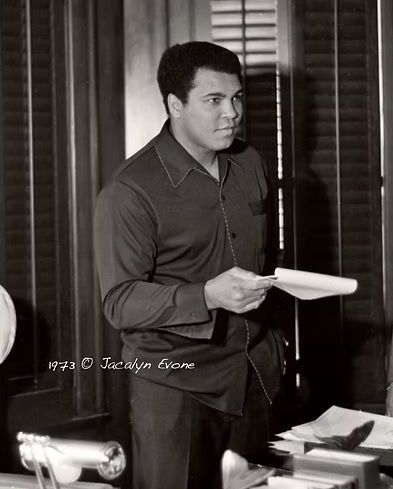
DG: You actually had the honor of photographing Muhammad Ali. What was the experience like, how did it present itself to you, and would you like to share the photo here?
JE: That was a moment that did not feel real for me, photographing Muhammad Ali. I was a young eager photographer, just growing into my skill when I had a chance to photograph him for an article. The shoot took place in his home, a gated community off Wilshire Blvd in Los Angeles. I was so nervous, and he spotted that as I struggled to get myself together. Ali, stopped what he was doing, walked up to me and started doing magic tricks. He did magic tricks! And he was so good, he made me laugh, and all the nervousness went away. I will never forget that day, his kindness. He wasn’t just a legend, he was also strength that filled the room, with a gentleness that the public could not always see but that I could feel that day.
And yes, I would absolutely love to share that photo which for me holds a story for beyond that captured in the image.
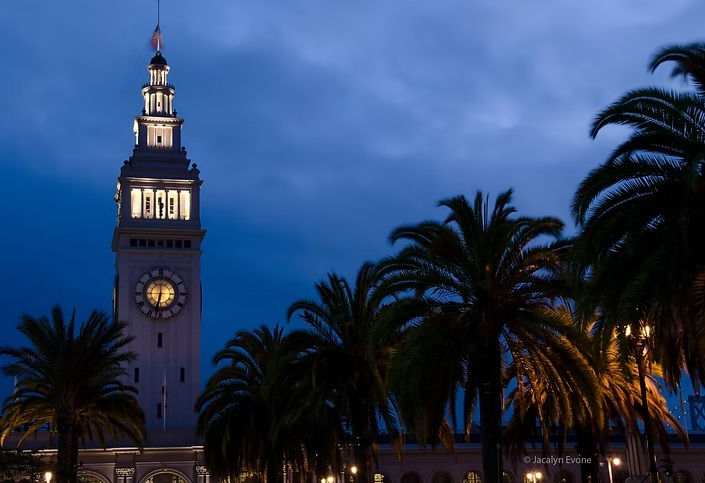
DG: Would you like to share more of your photos?
JE: Absolutely. My photography is an extension of how I see things inside the world in which I live. There is always a story or conversation behind my images. Some are quiet, some are bold, but they are always intentional, and I’m always open to sharing my work because I believe all art is meant to be shared and move beyond the artist.
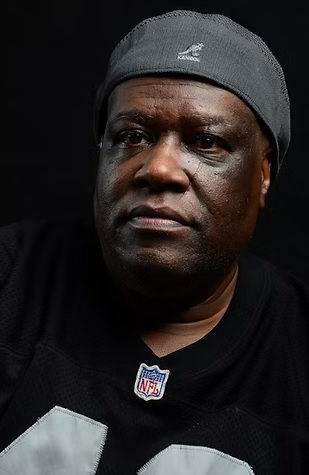
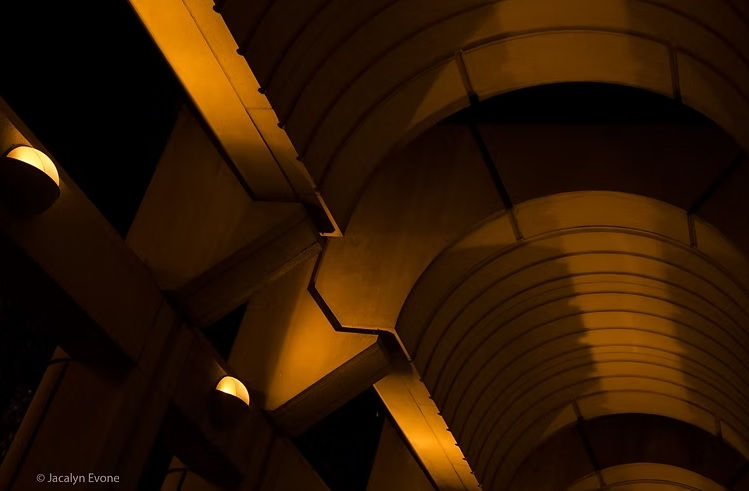
DG: You’ve dedicated a lot of energy to enriching the artistic lives of the youth. What are the differences in approach when it comes to working with young people as opposed to adults?
JE: Truth! Youth are eager questioners, who say what is on their mind, and I make sure to let them know that their voice matters. When it comes to adults, many hide their truths, unless they are poets. I find that working with adults, it is about helping them unlearn habits or break down expectations, self-judgements, even fear, the same self-judgement and fear I felt walking into the room filled with the presence of Muhammed Ali those many years ago.
Today, because I have moved past those insecurities and fear, I am able to, in both cases, work with youth and adults to let them know that their voice matters and that it is already inside of them.
DG: What are you reading or working on these days?
JE: While I cannot keep up with all my To-Read books stacked at the end of my bookshelf. Right now, I am reading poet Nikky Finney’s Rice, with foreword by Kwame Dawes. I am drafting poems almost daily and working on another collection of poetry while expanding my work of exploring how I can make my images and words live together to expand my visual storytelling.
I am always writing, creating, be it poems, visual artwork, or stories, and I never stop looking at how I might evolve even further.
Author Bio:
Vallejo, CA Co-Poet Laureate Emerita (Jan. 1, 2024 - Dec. 31, 2025), Jacalyn Eyvonne's books include I Am Not An Inconsequential Word-Poetry and Remnants, Venting To Verse: How To Turn Anger Into Poetry, and The Unyielding Weight of Words: Poems on Reflection, Healing, and Love. Along with her newest collection available in 2026, The Weeping Willow Is Black, she has co-edited Youth Poetry Letters and the recent A New Season: Poems for a World in Flux anthology. She is the former publisher of In The Company of Poets Magazine, with work featured internationally, including Hues of Spring Anthology 2, NYRA Publishers; World Healing World Peace, 2024, Inner Child Press, Holes: An Anthology, JLRB Press, Wheelsong United Kingdom Anthologies 3/4, Moonstone, Screaming at America, Rituals 2024, among numerous others. A graduate of the Academy of Art University in Motion Picture and Television, Jacalyn has taught youth poetry and monologue delivery, implementing Youth Poetry Workshops, the Poetry Playground, Youth Poets In The Spotlight, and Poetry and Art Chalk Walks. She is the founder/director of Monologues and Poetry International Film Fest and Open Mic, and has been featured in the Vallejo Times-Herald, Daily Republic, Vacaville Reporter, and The Mississippi Link newspaper.


Comments