
Marlon Sherman: California Poets Part 9, Five Poems
Updated: Nov 22, 2025
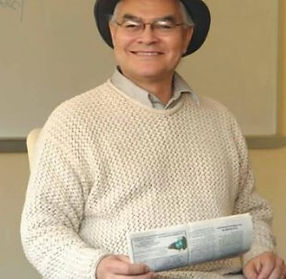
Marlon Sherman
December 22nd, 2025
California Poets: Part IX
Marlon Sherman
Five Poems
GRANDPA BEN
(BEN WORN OUT HORN)
blankets and sandwiches and
a washrag in a jar of soapy water
us kids
laughing and wrestling
in the backseat
until Dad tells us to
stop we’re rocking the car
I fall asleep somewhere around Philip
and wake up somewhere
north of the Cheyenne River
lost my sense of direction
totally turned around
feels like we’re headed east
never seen any cherries at
Cherry Creek but they must have some
cattle guards
dirt roads
over a yellowgrass hill to
a little log house
don’t know why I
call them Grandma Amy and Grandpa Ben
when they’re the only
Grandma and Grandpa I have
but that’s what
all of us call them
except Mom she
calls them Mom and Dad
I think Grandpa Ben invited the
whole reservation and they’re
all in the corral
one shot to the head
and the steer drops
like a dishrag
never seen a steer shot before
big deal but
everybody’s laughing
a lot of sharp knives and
brown hands and
the steer is roasts and ribs
and they hang the hide
over the back fence
and everybody gets something
and then they climb in their
buckboards and old Fords and
go home happy I guess
because they’re still
laughing and talking
Mom and Grandma Amy
spend all afternoon
scrubbing out that steer’s belly
and there’s a lot of it
like a slimy rope and
Grandma’s gonna be up early
tomorrow boiling it and
we’ll have roast steer
and taniga with timsila and
wojapi for dessert
but for now there’s papa saka
that I can chew on all day
until Grandpa grabs me
and laughs and calls me
tgalo and I get schu and
don’t eat any more
then he gives me
a knife case that
he beaded himself and
a wooden knife that
he carved to go with it and
he tells me not to
stab anybody with the knife and
I stick the case in my belt and
whip out the knife and
pretend I’m stabbing
all the bad guys in the world and
he laughs again and
I run outside to find
the rest of the bad guys
after supper when it’s dark
Grandpa tells us stories and
some are old and
some are new and
sometimes we laugh and
sometimes we’re scared and
then I kiss Grandma and Grandpa and
they smell warm like
woodsmoke
as they tuck us all
into their buffalo robe and
we go to sleep listening
to their soft Lakota
around the table
Whirlwind Horse
September 11, 2001
Louie was my friend;
he held me as a child,
as friends will,
and Sadie did too, yes, Sadie…
I remember
breathing in that warm
Whirlwind Horse breath.
This is what Louie said once:
Sit under a storm tree
if you want to be prairie popcorn.
I remember…
I remember the westering sun
playing games
with that old
late summer cottonwood,
dappling my hands gold and brown
and hinting of red,
come eve.
Clouds clotted,
as they will,
over the afternoon blue.
I scratched my back against the tree:
maybe it was chiggers,
maybe a flea,
maybe I just like the feel
of bark on my bare skin.
My eyes blinked,
maybe,
or closed, and
without notice
clouds blotted the sun,
as they will,
those impossible
thunderhead heights,
gathering lightning and rain
up and then up
until they could hold no more,
then
slamming bright arrows to the ground,
a hundred buffalo herds
passing close.
The air tickled, then prickled;
as my hair rose, so I,
shot like an arrow,
sprinted
into the wind, into the rain,
as buffalo will.
Energy spent,
I stopped, turned –
as mule deer will.
The sight and sound missed me,
or I them,
for behind me,
limp
as overdone corn,
lay
the old cottonwood,
now two,
split clean with an obsidian knife.
Rain surrounded me,
and Thunder’s stillness,
sharp in my chest,
while the sun sat quiet
over the sacred hills.
Louie and Sadie died
as friends will,
and when all else is gone –
which it often is –
the towering storm,
the reddening sun,
the sheltering tree –
I remember,
I remember,
I remember:
Whirlwind Horse breath.
And it is enough
for now.
THE FIRST TIME DAD DIED
Now that was a winter, the first time Dad died:
stars winked like a con man’s smile;
frozen breath and tears, all the same,
turned to crystal, perfect and clear.
Long night with Old Man Red Cloud,
singing and drumming
while the moon froze the snow lying hard and sharp
on the Old Year’s ice.
Dad crawled into his old ford Pinto,
crutches and drum by his side --
spinning and sliding, those reservation roads
sent him straight to the ditch where the
snow was too deep for those withered old legs
so he sat and watched his life collect
in patterns inside the windshield.
Stiff and cold when they found him next morning
like one of those antique steel toys.
Not a flutter of his frosted eyelashes,
nor a whisper from his chilly heart;
not a song from his singer’s lips,
nor a note from the drum on the seat,
but those Public Health doctors woke him right up,
screaming the pain of revival.
The frost didn’t bite him,
it swallowed him whole:
chewed on his ears, eyes and mouth.
He lay in the hospital, surrounded in white, and
mumbled past his swollen tongue,
“Don’t you believe them when they try to tell you
freezing is the way to go;
they’re goddamn liars and they’re lying to you:
It hurts like hell; it hurts like hell.
. . . And what did they do with my drum?”
THIS IS HER DREAM
For Dale Ann (Yurok/Howonquet), my wife
This is her dream and it was last night:
I was standing
over the river
on an empty platform made of
planks split from
a live redwood,
built for the men
to dip their iris nets in and
toss struggling salmon
onto river-slick planks,
When a jet boat
thrummed up to the platform
and a gray-haired man
standing in the boat
(he was the governor or something)
called out to me,
"What are you looking at?"
I kept my mouth shut and
just stared over his head.
I was standing on
the platform watching
two men in a canoe
tend their net,
When a jet boat
thrummed up to the platform
and a gray-haired man
standing in the boat
(he was the president)
called out to me,
"What are you looking at?"
I just stared over his head,
sun in my eyes.
Again he asked me
"What are you looking at?"
I just stared over his head,
wind in my long hair.
Once more he asked me
"What are you looking at?"
Eyes still on the river,
I told him
"I'm watching the ripples,
downriver from
that redwood canoe"
That was her dream and it is tomorrow.
SHE WOVE MOONBEAMS INTO HER BASKETS
For Dale Ann Frye Sherman, in honor of her mother,
who was born Dorothy Lopez at the mouth of the Smith River.
She wove moonbeams into her baskets
Yes, she was a strange one,
they all agreed.
And lazy, too.
Slept all day, out all night.
The whole village looked at her sideways
and
sniffed when they passed by her home.
Every other woman,
up at dawn,
working all daylight long,
feeding the kids
washing their faces
combing their hair
gathering ferns, beargrass, spruce,
stripping them,
weaving baskets.
Walking by her house,
early sun misting through redwood,
burden baskets on backs,
clucking tongues at this sleepy girl,
“Look at that one, sleeping her day away.
She’ll never get a husband like that.”
At noon she woke, smiled, stretched,
climbed out the hole,
stood, stretched again, arms wide to the sky,
thanked the River for flowing,
Sun for shining,
Sky for its color.
She went back inside,
took her basket and her bag,
put in seaweed and smoked salmon,
walked the trails uphill,
nibbling salmon and seaweed.
She gathered grass,
She gathered ferns,
placed them lightly in her basket,
walked to a clearing high on the hill,
sat, preparing her basket to weave,
shadows long as Sun set,
laid out materials,
said goodnight to Sun,
Hello to Evening Star,
waited for Moon.
She sat beneath the trees,
gathered moonbeams as they fell,
shredded through leaves,
so her new baskets
glowed in cool summer’s
luminous and healing beauty.
Far up the rain coast,
far down the dry coast,
far over the mountains,
they treasured her baskets
as objects of great wealth,
because
this lazy girl who
slept all day
wove moonbeams into her baskets.
Author Bio:
I am Oglala, of the Lakota Nation. Mark, my father, was Oglala. Alice, my mother, was Mniconjou. My seven sisters and brothers heard my first cries in the dark of a two-room log house outside Kyle, on the Pine Ridge Reservation in South Dakota. For anyone who has been born on the land, raised among a tribe, homesickness can be a terminal illness. Those of us who are away from our tribes choose different ways to ease the symptoms. Some drink, trying to drown the pain; some sing and drum, trying to revive the memories. I write, hoping to do a little of both. Often, as I lie awake here in the California dark, when all is quiet except for my drumming heart, I ask the memory of pine winds and gentle summer nights to shush me to sleep.
I am a professor emeritus of Native American Studies, having taught at Humboldt State University in Arcata, California.
______________________________________________________
My brother and I lay on our bellies in a cactus patch at the top of a hill, small tufts of grass in front of our faces. Small brown ants walked their trails inches from our noses. In the swale below us, moving from north to south, antelope grazed, peaceful under the watchful eye of an old matriarch. Far off in the east we saw a cloud of dust rising from the powwow grounds near Oglala. We thought we could hear the deep drumming from the dance circle, but that couldn't be: even though we knew the sound carried for miles, the wind was from the wrong direction.
A fresh, cool breeze gathered up fluffy morning clouds. Rain would come by midafternoon, one of those rains that quiets late summer dust and brings out children's smiles brighter than the sky behind the retreating clouds.
We glanced skyward and saw black wings riding the cool wind. We had lain there so long watching the antelope herd that buzzards had begun circling above us.
"Watch us if you want, Brothers, but you're wasting your time," I thought. "We're alive; you should just move along, because we're alive."


Comments