
Shikha Malaviya: California Poets Part 11, Five Poems
Updated: Oct 8
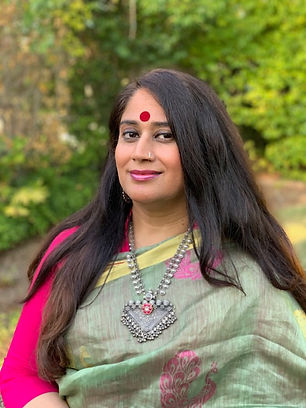
Shikha Malaviya
October 20th, 2026
California Poets: Part XI
Shikha Malaviya
Five Poems
COINS
We were at the age when
our mouths & minds had no filter
seven and nine, my brother & I
we learnt the chicken dance
at a resort in Tenerife in 1980
from a group of merry Britishers
whom we lectured on how they plundered
India, and most nodded in agreement
asking how we knew all of this at such a young age
though they had already guessed who was responsible
our father & mother, Indians who had met & married in Britain
where my brother and I had been conceived
yet we were Indian, our hearts and passports said so
our very brown skin and thick brown hair betrayed it
and we had a little green card that made us
residents of yet another country
but we were still Indian by ethnicity, by heart
it would take us a lifetime to sort through this
though we didn’t know it yet
and tell me which age is the right one to learn
of colonialism, to learn of the other, to see greed
in the form of a coin waterfall slot machine
and feed it quarters like the one at the resort
where white men and women sat naked
in the sun waiting for their skin to brown
and blister like a roast in the oven, while we shielded ours
One morning I put a coin in the waterfall, and it shook
the tray, clinking—shk-shk, shk-shk, shk-shk, silver spilling out
a man ran up to me and said in a crisp British accent
‘Those coins are mine, I was playing it a few minutes ago
I was going to put in one more, so the coins belong to me’
I felt sorry for him, yes, I did, so I gave him a few
but I kept the rest, yes, I did, and told him
this doesn’t cover what we are due
WAITING FOR MY OWN INDIAN SUPERHERO/INE
And how did you think we’d turn out? Of course we are pacifists. The father of our nation, a man who proclaimed nonviolence, giving the enemy his cheek. We never grew up reading Superman or Spiderman. Our heroes were almost always flawed and mostly celestial, between the matte-colored pages of Amar Chitra Katha: hold-your-breath-blue Krishna, pale peach apsara Malavika with an hourglass body, minaret-haired Buddha under a bodhi tree that held him perfectly, always torn between karma and nirvana, or the elusive, never aging, Phantom who lived in Africa, who from a distance, looked like a giant, muscular eggplant, riding a horse—& then there was red-haired, freckled Archie and his constantly breaking down jalopy, with two girls fighting over him as he navigated high school (oh to be so coveted!) & Asterix and Obelix: one short and smart, one sweet, big, and lovably oafish, two Gauls defending their turf against the Romans in 50 BC—how we love to dwell in the past! Last but not least, Tintin and his most faithful Wire Fox Terrier companion, Snowy, traversing exotic locations, whether trudging in Tibet or walking the wilds of Congo. There was no one from the present from where we were, no one with our muddy skin, our not quite straight hair, our names that held our villages, our mashed-up vernacular, our exiled silences...until Shaktimaan—oh, if you had arrived a decade earlier, I might have learned to love your maroon velvet suit with gold gota on the shoulders. But being from a tropical country, what you wore made no sense. You should have been dressed in the thinnest of cottons. I imagine your obituary saying that 'he died of spontaneous combustion.' I’m still waiting for my superheroine, the one who castrates rapists with a single glance, that turns all the dirty men blind, that gathers all the young and hopeful and tells them they are good enough. Let’s call her Polyester Padma, a cross between Silk Smita and Kali, who seduces all the villains with a cabaret dance before slaying them with the safety pin that fastens her saree blouse glittering with sequins, dancing over their still bodies as onlookers whistle and cheer.
THE STORY OF OUR NAMES
Let's start with the first wobbly letter
we wrote when we didn’t know
if we were left or right-handed
in my case, perhaps, an inverted S
shaped like a snake
or a river with two bends
it's all about perspective
every name carries a story,
mine the tip of a mountain
the Himalayas to be specific
shaped like the nib of a pen
where my great grandfather
was once doctor to a king
of a princely mountain state in India
and my grandfather, a poet and teacher
whose name meant Goddess Durga’s offering
my father, named flower bud,
left the Himalayas as a teenager
for England because he had faulty eyes
and needed surgery, not to study
computer science as I had assumed
but to see better, and England is where
he met my mother, named moon glow
who also was from the Himalayas
but had traveled from there first to Ghana
before reaching the land of the Thames
how far they both traveled to meet
one another, though their point of origin
was the same. And maybe that is what
names are, poems that are archives
of things left behind and things to be
this naming of me, Shikha, derived from
the Sanskrit word Shikhar, top of the peak
tip of a flame, temple spire
or the tuft of hair on a bald priest’s head
that bounces and waves, a cultural flag
of the mind. In my name, a GPS pin
that helps me return to where I’m from
each time someone says it
Of course, sometimes I don’t want it
this name others stumble over
that I help others pronounce again and again
by telling them Chicago without the go
which I discovered while riding the bus
to college as the driver yelled out Chicago Avenue
and I thought he was calling me
And yet sometimes I became Chica, Sheikha
or Shanikwa, a Jewish coworker even called me Shiksa
And at a coffee shop in San Francisco,
they handed me my cappuccino with Shitkha
written on the cup, which in my mother tongue
translates as eat shit. It was okay for the State I grew up in
to be called cloudy water in Dakota, for cities within
to be Minnetonka or Shakopee
a waterfall could be Minnehaha, a camp
called Tanadoona, but Shikha was sometimes too heavy
for them to bear, another kind of Indian
and perhaps there was only room for one
and they had been pushed into corners,
spaces that they tried to make seem special
by marking them reserved for preservation
THIS LITTLE ARMY: a Golden Shovel
After the COVID-19 Pandemic and William Carlos Williams
Neither typhoon nor earthquake but a centurion so
small, it slips through mouth and nose, without much
fanfare, undetected. How it announces its arrival depends
A cough that breaks the silence or beads of sweat upon
the forehead? This little army that has nary a
spine yet stands so tall and turns the earth red
All ships anchored, stilled the jet plane’s wheel
As skies turn bluer and dew weighs the barrow
this spring. Locked within our homes, glazed
in anxiety, we seek answers, measured with
syncopated breaths. What becomes essential—rain
to squelch the drought—hope, a glass of water
half-full. We will meet again, I promise, beside
the fountain in the park, commiserating over the
ones we’ve lost, as children trawl for coins
white from wishes of when we were oblivious as chickens
PAPER BOATS: A GAZA GHAZAL
There will be no love letters tonight in your city
only gauze flapping like ghosts tonight in your city
In a house with no roof and cracked windows
you read Darwish amidst the rubble tonight in your city
Stars shine with abandon, as if nothing has happened
please kiss all the children left behind tonight in your city
No silver bells, only mortar shells
the roads are long and hungry tonight in your city
Tearing squares of paper from discarded textbooks
they make paper boats and set sail tonight in your city
I kneel in prayer, hands turned towards the sky
wondering if God is there tonight in your city
Author Bio:
Shikha Malaviya is a poet, writer, and publisher. Her latest book, Anandibai Joshee: A Life in Poems (HarperCollins India), reimagines the groundbreaking journey of India's first female physician and the first Indian woman to study medicine in the US in the 19th century. Her earlier collection, Geography of Tongues, explores themes of immigrant identity and belonging. Shikha’s poetry has been nominated for the Pushcart prize as well as featured in Prairie Schooner, PLUME, Catamaran, and other distinguished journals. As co-founder of The (Great) Indian Poetry Collective, curator at the South Asian Literature & Arts Festival (SALA) as well as a Mosaic America Fellow, Shikha works to amplify diverse literary voices. Shikha has been an AWP Writer to Writer poetry mentor for seven seasons, poetry faculty at the Rooted & Written conference and is a member of the SF Writers Grotto. She lives in the San Francisco Bay Area with her family.


Comments